

BLOG



Enterprise systems built on legacy technologies are still everywhere.
They run critical workflows. They support customer operations. They power internal tools that the business depends on every day. In many cases, they also contain years of hard-earned business logic that no off-the-shelf platform can fully replicate.
That is why legacy systems are so difficult to walk away from.
The challenge is not always that these applications have stopped working. It is that they were built on aging, deprecated technologies that are increasingly expensive to maintain, difficult to enhance, and risky to build around. Over time, even small updates become harder to deliver. Integrations get more fragile. Performance lags behind expectations. Security concerns increase. And the people who understand the original architecture may no longer be around.
At a certain point, the question shifts from whether the system still works to whether it still makes business sense to keep it as-is.
The hidden cost of legacy enterprise software
Legacy systems do not just create technical debt. They create business drag.
Many older enterprise applications were built for a different era of software development. They may depend on unsupported frameworks, monolithic architectures, tightly coupled code, or outdated operating environments. As a result, teams often struggle to move quickly or confidently.
The business impact usually shows up in familiar ways:
New features take too long to release
Integrations with modern platforms become difficult
Maintenance costs keep rising
User experiences fall behind current expectations
Reporting and visibility remain limited
Teams rely on manual workarounds to fill the gaps
Why rip-and-replace is often the wrong answer
For years, companies facing legacy software challenges have felt trapped between two bad options.
The first option is to keep patching the old system and accept the growing cost, risk, and complexity that come with it.
The second option is a full rip-and-replace initiative. That approach may sound clean on paper, but in practice it often turns into a multi-year transformation effort with a price tag in the millions. Once discovery, architecture, reimplementation, integrations, testing, retraining, and change management are all accounted for, the timeline stretches and the risk grows.
The biggest problem with rip-and-replace is not only cost. It is uncertainty.
When a legacy application has been central to operations for years, it usually contains countless business rules, edge cases, workflow exceptions, and unofficial “this is how we really do it” processes that never made it into formal documentation. Rebuilding all of that from scratch is difficult, expensive, and disruptive.
That is why many organizations delay modernization even when they know they need it.
AI is changing the modernization equation
Today, AI is making application modernization far more practical.
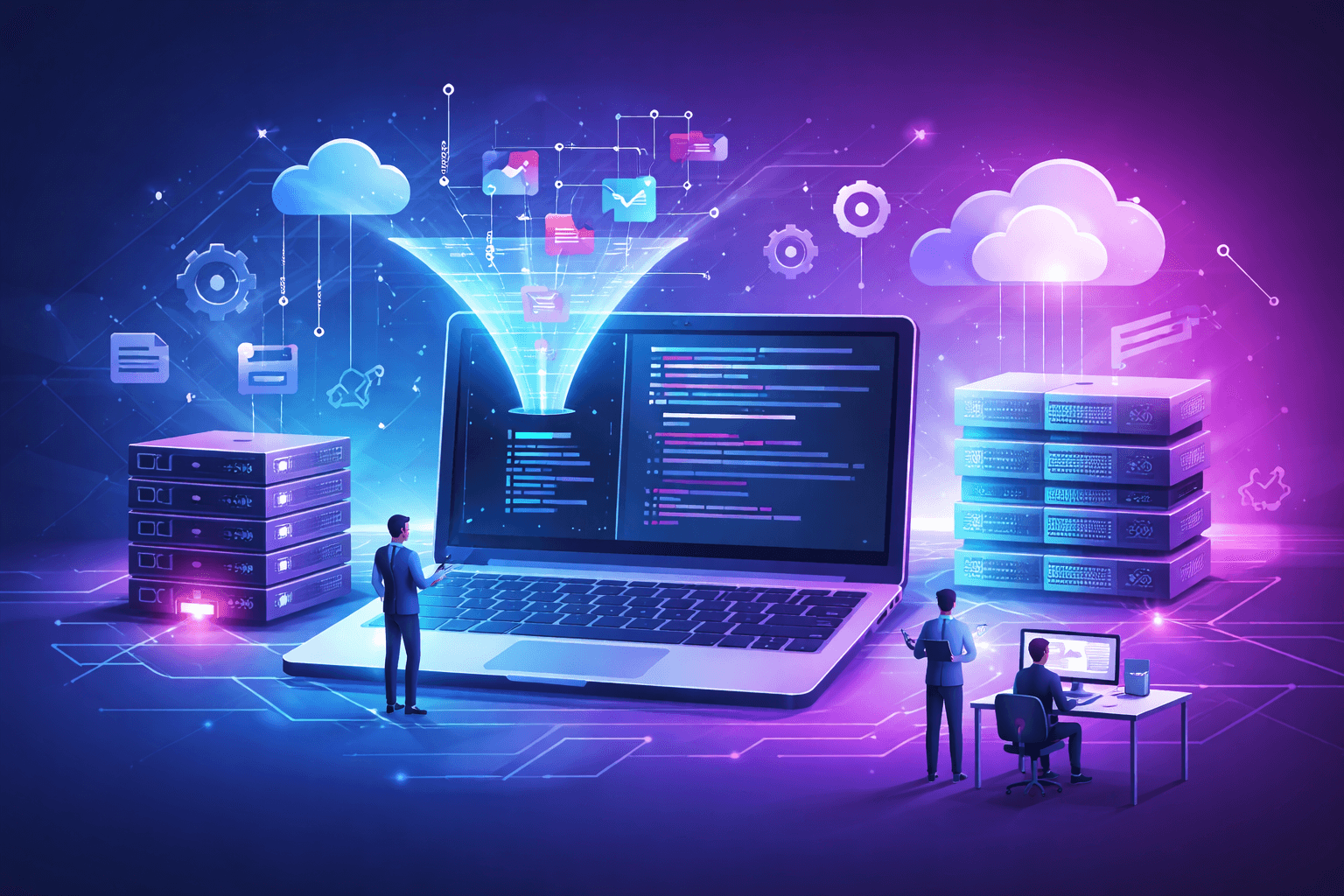
Instead of starting from zero, organizations can now accelerate parts of the modernization process that used to take months of manual effort. AI can help analyze legacy codebases, identify reusable logic, document system behavior, support translation from older stacks into modern languages and frameworks, and speed up redevelopment and testing.
At Definity, that means helping organizations translate old, legacy, and deprecated software systems into modern, maintainable applications in months rather than years.
AI does not make modernization effortless, and it does not eliminate the need for experienced architects and engineers. But it does dramatically improve speed, visibility, and efficiency across the process.
Modernize the codebase without losing what made the system valuable
One of the biggest misconceptions about modernization is that you have to throw everything away.
In reality, many legacy systems still contain valuable functionality. The workflows may still be right for the business. The logic may still reflect years of operational learning. What needs to change is the technical foundation underneath it.
This is where a smarter modernization strategy matters. Now application modernization engagements can preserve what still works while improving what no longer does. That may include:
Translating legacy code into modern languages and frameworks
Breaking monolithic applications into more maintainable architectures
Improving performance and scalability
Preparing the system for cloud-native deployment
Simplifying integrations with modern tools and services
Reducing long-term support risk
In other words, modernization does not have to mean starting over. It can mean translating, refactoring, and rebuilding strategically.
You can choose the UI/UX path that fits your business
Not every company wants the same kind of modernization outcome.
Some organizations want to pair backend modernization with a fully redesigned user experience. They see the initiative as an opportunity to improve usability, boost adoption, and deliver a more modern digital experience to employees, customers, or partners.
Others want the exact opposite.
They want the codebase, architecture, and performance modernized, but they prefer to keep the familiar legacy look and feel that users already know. In some cases, that is the smartest choice. It reduces change-management risk, shortens training time, and lets the business realize technical gains without forcing users to relearn every workflow. At Definity we believe in client-first execution and practical outcomes over unnecessary disruption.
That means modernization can be tailored to your priorities.
You can choose to:
Redesign the UI/UX completely
Refresh the experience in phases
Keep the classic interface while modernizing the backend
Rebuild only the highest-value workflows first
That flexibility is one of the biggest reasons modernization is becoming more achievable.
A better path than living with old systems or replacing everything
For years, enterprises have felt forced to choose between maintaining outdated applications and funding massive replacement projects.
Now there is a third path.
With AI-assisted modernization and the right engineering partner, organizations can preserve valuable business logic, reduce risk, accelerate timelines, and move legacy systems onto modern development stacks far faster than before.
That is exactly where Definity can create value: translating aging in-house systems into modern platforms that are easier to support, easier to scale, and easier to build on for the future. And because the process can be adapted to the needs of the business, clients can decide whether they want a full visual refresh or want to preserve the classic experience users already trust.
Modernization does not have to be a multi-year leap into the unknown. It can be a smarter, more controlled transition… one that protects what matters, modernizes what is holding you back, and gets you to a future-ready application in months.
Conclusion
Legacy enterprise systems may still be functional, but that does not mean they are sustainable.
As maintenance costs rise and agility declines, many of our customers are realizing that keeping outdated systems alive indefinitely is not a long-term strategy. At the same time, full rip-and-replace programs can be too expensive, too slow, and too risky for many businesses.
Definity's decades of experience coupled with the efficiency gains of AI, we're changing the status quo.
By accelerating code analysis, translation, redevelopment, and testing, Definity can help businesses modernize legacy applications faster and more pragmatically than traditional approaches allowed. Whether the goal is a full UI/UX transformation or preserving the familiar legacy experience while upgrading everything underneath, application modernization now offers a more flexible path forward.
The future does not always require starting over. Sometimes it means translating what already works into something modern, scalable, and built for what comes next.
Share Article
Latest News