


MVP in <30 days
SOR → structured test outputs
Improved requirements traceability
IDC required a faster and more consistent method to convert Statement of Requirements (SOR) documents into usable test procedures, a task that is traditionally manual, engineering-intensive, and time-consuming. Definity delivered an AI-powered prototype (MVP) in under 30 days, enabling IDC to demonstrate how Generative AI can streamline document processing and accelerate test procedure generation, saving time and reducing effort across the QA workflow.
The Challenge
IDC’s Design Verification & Testing (DVT) planning relies heavily on extracting requirements from Statement of Requirements (SOR) documents and translating those “shall” statements into test procedures. This workflow depended heavily on manual interpretation, formatting, and test planning, resulting in:
Long engineering-heavy timelines and repeated effort across projects.
Limited traceability between requirements and test procedures.
The Solution
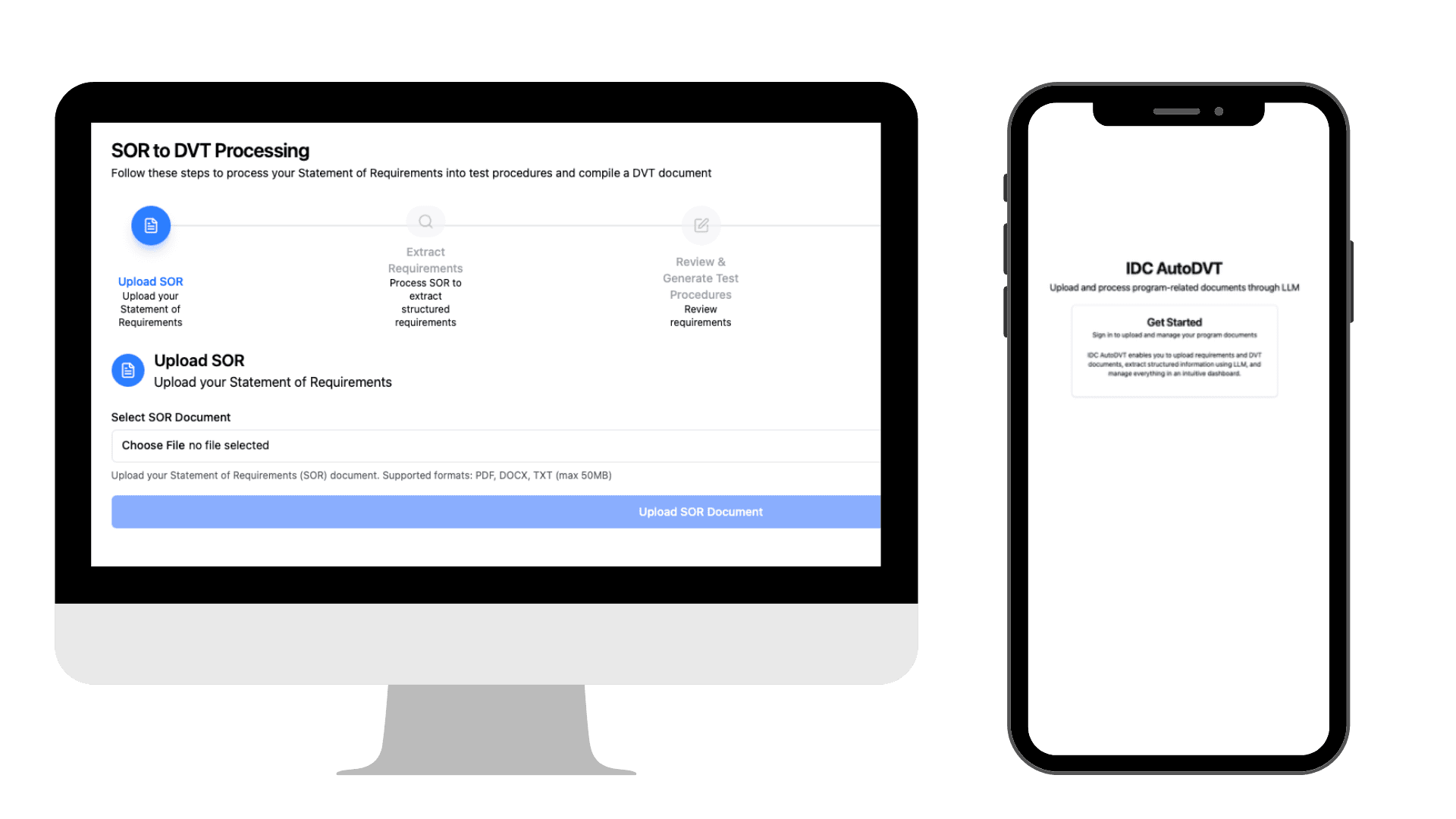
Definity created a purpose-built AI prototype that standardizes SOR ingestion and produces structured, editable outputs suitable for generating test procedures. The application turned a manual process into a semi-automated, repeatable workflow.
Document processing & standardization
for more consistent AI results.

AI-driven analysis
to extract and structure requirements.
Structured output generation
(editable, reusable formats)

Clear linkage between requirements and test procedures
to support traceability.
Why a Purpose-Built Solution (vs. “Just use ChatGPT”)
During the project, the question came up - Why not just use ChatGPT? While LLMs like ChatGPT are extremely powerful and useful, they're are many limitations when trying to apply them to business requirements. These limitations include inconsistent inputs/outputs, lack of standard processing, limited formatting control, lack of customization for IDC terminology, and no workflow integration. The prototype addressed these issues with a purpose-built, standardized process tailored to IDC’s needs.
Technical Approach (Prototype Architecture)
The prototype used a secure, staged pipeline designed for IDC’s workflow:
Input Processing: Standardizes SOR documents into a consistent format for AI processing.
AI Analysis: Uses OpenAI models with an opt-out training approach to support data confidentiality requirements.
Output Generation: Produces structured, editable Markdown outputs that can be reviewed and refined.
The prototype architecture also included an authenticated UI and a database layer to store structured outputs and prompts for repeatable processing.
Timeline & Delivery (Under 30 Days)
The project plan established a rapid prototype cycle with recurring stakeholder alignment:
Kickoff and alignment on objectives/deliverables
Weekly touchpoints to maintain scope control and momentum
Prototype + training to enable IDC staff to confidently use the tool
IDC-led demonstration to key stakeholders
This fast delivery supported IDC’s goal of quickly proving value and building internal buy-in for AI-assisted QA workflows.
Risk Management (How We Kept the MVP on Track)
To support the tight timeline and ensure adoption, the plan emphasized:
Early testing with real SOR data to surface model and integration issues
Focused scope and weekly check-ins to manage schedule pressure
Training + documentation to ensure confident handoff and knowledge transfer
What’s Next (Path to Production)
With the MVP validated, the recommended next steps to launch a production-grade solution are:
Fine-tune the model using IDC historical data: Improve accuracy for IDC engineering processes, formats, and test standards.
UI/UX polish and workflow hardening: Streamline review/edit flows, strengthen validation, and improve usability for non-technical users.
Production launch: Finalize deployment architecture, security controls, monitoring, and governance for a full release.
Facilitate SOR document processing
(faster requirement extraction and structuring).
Accelerate test procedure generation
reducing manual effort.
Save time and resources
turning weeks of work into a significantly shorter cycle in the QA planning phase.
Discover More Success Stories